SMASH SPECULATION
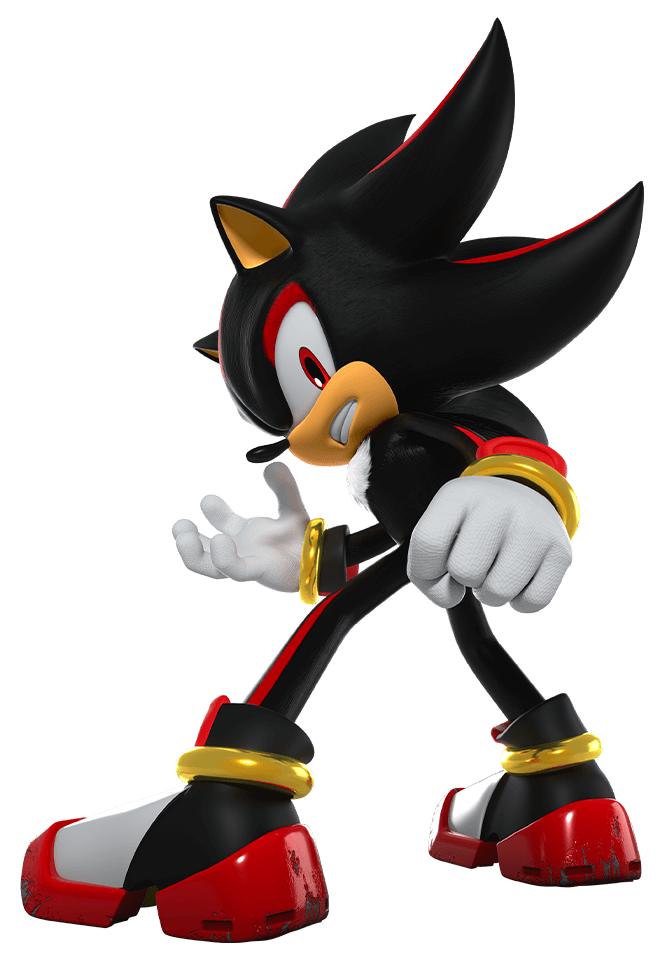
Promotional artwork: Shadow the Hedgehog / SEGA. Source: SEGA
In Brief
Shadow is the obvious Sonic rival for Smash, but only if he is treated as more than a darker echo fighter.
- Core argument: Shadow should contrast Sonic through control, spacing and Chaos abilities.
- Why him: He has recognition, history, current relevance and a natural rivalry Smash already understands.
- The hook: A proper Shadow moveset would feel distinct from the first input, not like Sonic with a darker palette.
Smash Doesn’t Need Another Sonic. It Needs Shadow Done Properly.
Few characters walk into a Smash conversation carrying as much popularity, expectation, and baggage as Shadow the Hedgehog.
Introduced in Sonic Adventure 2 in 2001, Shadow was not just another rival thrown into the Sonic universe to look cool for the box art. He arrived during a strangely important moment for the series: Sonic Adventure 2 was one of the final major Sonic releases tied to Sega hardware before Sonic’s future became much more multiplatform. Its later GameCube version, Sonic Adventure 2 Battle, helped bring that era of Sonic directly to Nintendo players — which makes Shadow’s Smash absence feel even stranger in hindsight.
Shadow was also a complete tonal shift. Sonic was speed, colour, attitude, and effortless confidence. Shadow was restraint, intensity, and the overwhelming sense that he was always one cutscene away from saying something deeply serious about destiny.
That could have gone wrong. And honestly, sometimes it did.
But the reason Shadow stuck around is simple: the core idea works.
He is Sonic’s equal. Not his sidekick. Not his knock-off. Not “evil Sonic,” despite how tempting that label is if you only glance at him for three seconds. Shadow is the rival who believes he belongs at the centre of the room, and half the time, he is probably right.
Which is why his absence as a playable fighter in Super Smash Bros. still feels weird.
Yes, he appears as an Assist Trophy. In fact, Shadow joined Smash’s supporting cast all the way back in Super Smash Bros. Brawl, where he used Chaos Control to slow nearby fighters while sparing the player who summoned him; a cute nod, but still very much a cameo role.
That is Smash giving Shadow a visitor badge when he should, by now, have a roster slot.
For a character this recognisable, that half-step almost feels louder than leaving him out entirely.
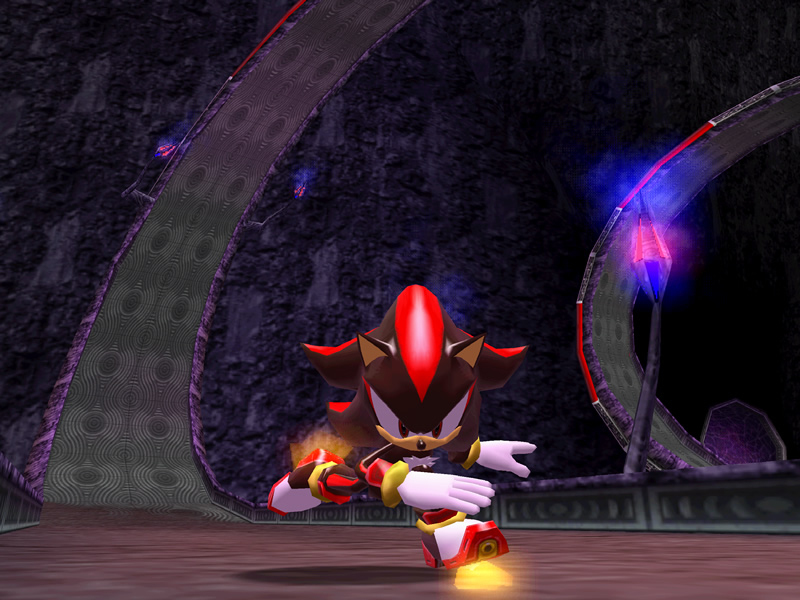
Gameplay image: Shadow in action. Source: Sonic Stadium
Why Shadow Is the Obvious Sonic Pick
If a future Smash game expands Sonic representation, there are a few names that immediately deserve to be in the conversation.
Eggman is the big one, obviously. He is Sonic’s main villain, a gaming icon in his own right, and the kind of character Smash could absolutely turn into a bizarre mech-based menace. Tails, while quite a sensible pick, has plenty of history and heart. Knuckles brings pure brawler energy, a different silhouette, and the kind of straightforward appeal Smash fans would understand instantly. Amy has only grown more relevant over time, and there is a genuinely strong case for her as a hammer-swinging wildcard with far more personality than people give her credit for.
All of them could work. Honestly, any of them could probably carry their own article.
That is future post bait, and frankly, it is good bait.
But Shadow sits in a different category.
He is not just another Sonic character who would be fun to add. He is the rival. The mirror. The character built to stand directly opposite Sonic and make him feel more complete by contrast. That gives him something the others do not have quite as cleanly: an immediate Smash-ready relationship with the fighter already on the roster.
Smash understands rivalries. Mario has Wario. Link has Ganondorf. Samus has Ridley. Kirby has Meta Knight. Sonic has Shadow. not necessarily his main villain, but his cleanest rival mirror.
That does not make Eggman, Tails, Knuckles, or Amy bad choices. Far from it. But if the Sonic the Hedgehog franchise was to only get one more representative, Shadow certainly feels like the headline pick.
He brings history, recognition, contrast, and a built-in dynamic that Smash barely needs to explain. Everyone gets it immediately. The blue one is fast and cocky. The black-and-red one is fast, cocky, and has definitely stared out of a rainy window before.
That is a roster pitch you can sell in five seconds.
The Clone Fighter Problem
Of course, there is one big issue.
On paper, Shadow risks falling into the oldest Smash trap: the clone fighter. Or, using Smash Ultimate language, the echo fighter. Same rough silhouette as Sonic. Same speed-based origins. Same general anthropomorphic hedgehog physics.
It is all too easy to imagine the boring version where Shadow gets a few altered animations, a darker colour palette, and a moveset that quietly admits nobody wanted to commit.
That version of Shadow would be a mistake.
Actually, stronger than that, Shadow as an echo fighter would be a waste of the slot and a waste of the character.
If he joins Smash, he should not be Sonic with better eyeliner. Full stop. Reducing him to a palette swap with attitude misses the entire point of the character.
Sonic’s own Smash identity has always leaned into unparalleled momentum. His Brawl moveset was built around Homing Attack, Spin Dash, Spring Jump, Spin Charge, and Super Sonic; exactly the kind of kit you would expect from a character defined by speed and constant motion.
Shadow should be different.
He should be control.
He should feel heavier, sharper, and more deliberate. Less “you can’t catch me,” more “you’re in my way.”
That is where Shadow becomes interesting. Not because he copies Sonic, but because he pushes against him.
Shadow Has Always Been More Than “Edgy Sonic”
Here’s the thing: Shadow’s reputation is funny now because parts of it were already funny then, even if unintentional.
The 2005 Shadow the Hedgehog game leaned super hard into aliens, moral paths, vehicles, and guns. So many ridiculously oversized guns. It’s one of the easiest Sonic games to joke about, partly because it sometimes feels like it was designed inside a Hot Topic during a thunderstorm. But, in spite of its unmatched memeability, it also matters. That game cemented Shadow as more than Sonic’s rival; it made him a protagonist with his own mythology, his own baggage, and his own messy corner of the franchise.
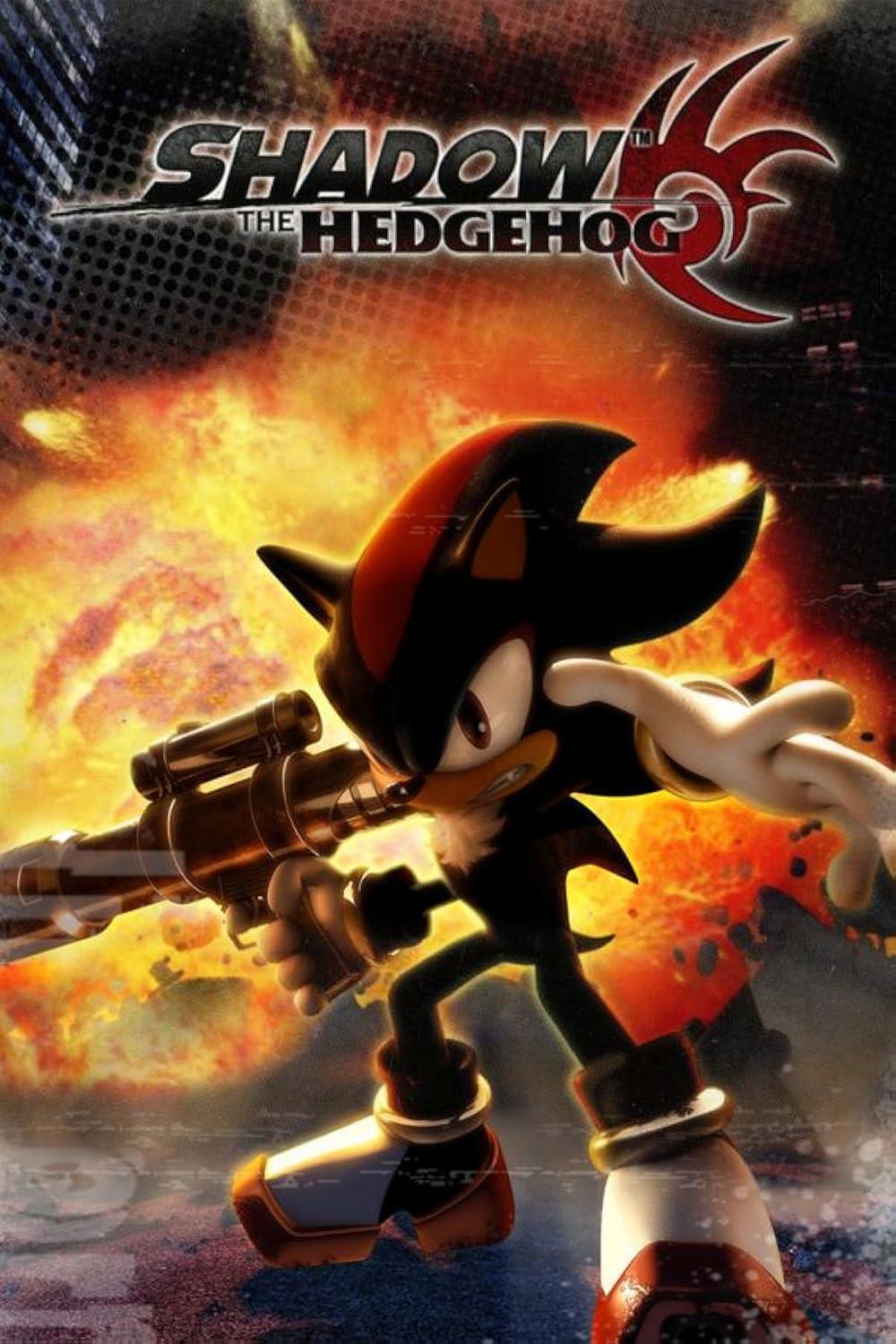
Cover artwork: Shadow the Hedgehog (2005) / SEGA. Source: IMDb
That matters for Smash.
Because Shadow is not just “the black-and-red Sonic.” He comes with Chaos Control, Chaos Spear, the Space Colony ARK, Maria, Gerald Robotnik, Black Doom, Team Dark, and the whole “Ultimate Life Form” identity. Some of that lore is genuinely compelling. Some of it is absolutely ridiculous. The best Shadow material understands that both things can be true at once.
And yes, before we pretend otherwise, the internet got involved too.
Shadow is one of those characters whose reputation escaped the source material years ago. He exists somewhere between canon, fan edits, meme culture, and people quoting his most dramatic lines with complete sincerity. Yes, the Latinas meme exists. No, it should not inform his moveset. Moving swiftly on.
The point is that Shadow has a cultural footprint beyond just “Sonic character.” People know him. People joke about him. People still argue about him. That matters.
And recently, Sega has clearly understood that too. Sonic X Shadow Generations brought Shadow back into focus with a new story campaign built around his history, powers, and status as the Ultimate Life Form. Sega’s own marketing framed the game around Shadow’s brand-new story campaign and iconic stages from his past.
In other words, this is not a character surviving on nostalgia alone.
Shadow is still current. Smash should notice.
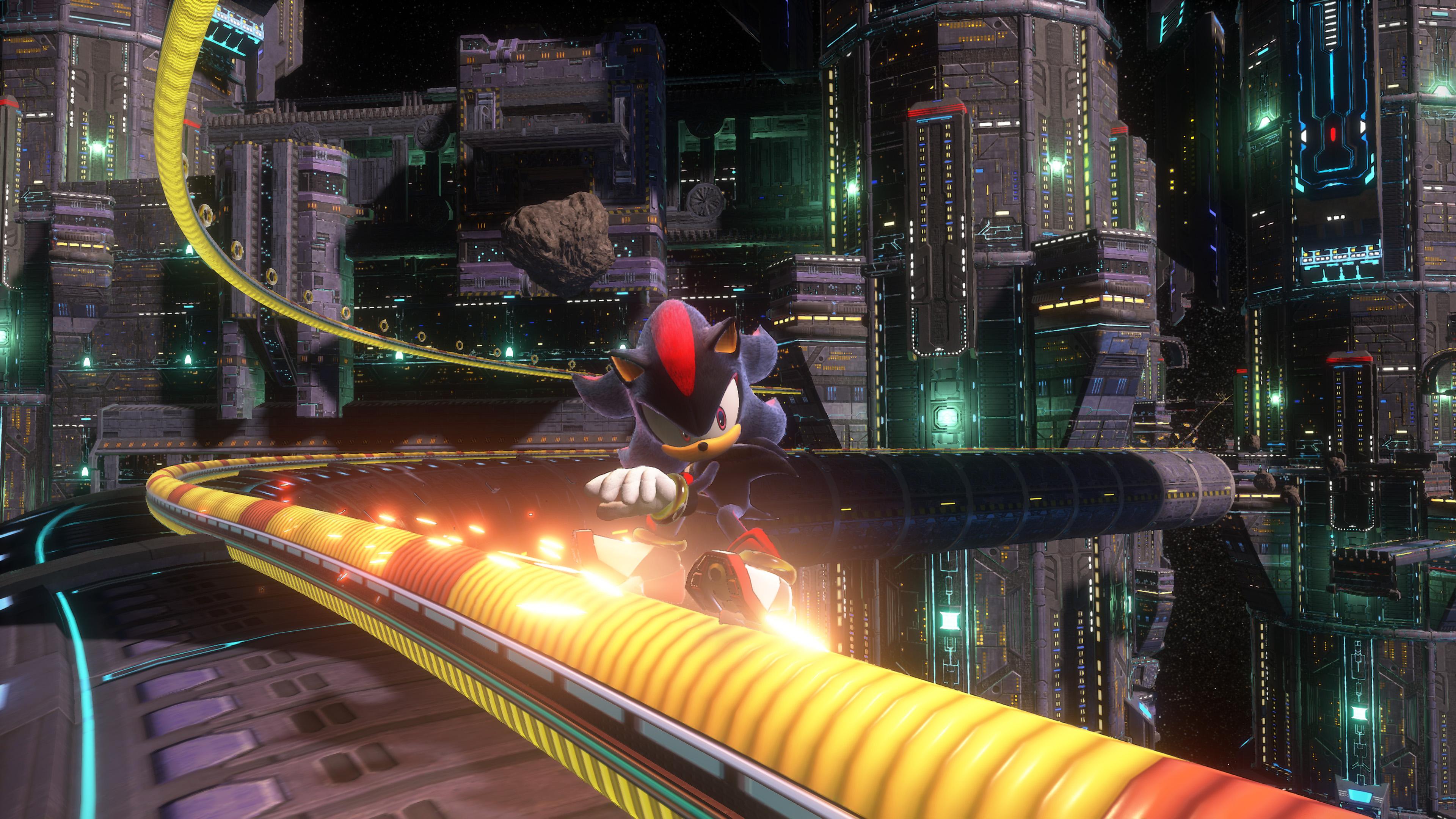
Recent gameplay: Sonic X Shadow Generations / SEGA. Source: SEGA
So What Would Shadow Actually Play Like?
The answer cannot be “Sonic, but edgy.”
That is the lazy version, and nobody needs it.
Shadow has his own lane. His identity is built around Chaos powers, teleportation, hover shoes, precise strikes, controlled aggression, and, as a very specific 2005-era nod, the occasional firearm. He is not just fast. He is forceful. He does not bounce around the stage like Sonic; he cuts through it.
Once you build around that, the moveset stops being damage control and becomes the entire argument.
Shadow would not need to prove he is different from Sonic. He would feel different from the first input.
Shadow the Hedgehog Moveset Concept
Attributes
Weight: Medium-heavy
Movement: Fast, but with controlled acceleration
Jump: Average height, with strong aerial drift and a brief hover
Archetype: Precision-based hybrid fighter using Chaos abilities, spacing tools, and close-range pressure
Shadow should not be as slippery as Sonic. He should still be quick, obviously, but his movement needs more weight behind it. The fantasy is not losing control of a speed demon. It is piloting something dangerous with the safety off.
Basic Attacks
Jab
A tight three-hit punch combo ending with a palm strike. Direct, efficient, and much less bouncy than Sonic’s cartoonish rhythm.
Dash Attack
Shadow slides forward on his hover shoes into a rising kick. It carries speed, but it feels intentional rather than reckless.
Tilts
Forward Tilt
A measured side kick designed to control space and keep opponents exactly where Shadow wants them.
Up Tilt
A quick upward kick with a compact hitbox. Fast, clean, and useful without being flashy for the sake of it.
Down Tilt
A low sweep with trip potential, giving Shadow a reliable way to start pressure at close range.
Smash Attacks
Forward Smash
Shadow briefly pulls a handgun for a single powerful shot straight ahead, complete with recoil.
Yes, it is blunt. Yes, it is slightly ridiculous. But as a deliberate nod to Shadow the Hedgehog 2005, it works. The point is not to turn Shadow into a gun character. The point is to acknowledge the part of his history everyone remembers, laugh directly in its face, and then keep the rest of his kit focused on Chaos powers where it belongs.
Smash has survived Snake, Joker, Bayonetta, and plenty of characters bringing dangerous toys to a cartoon fistfight. It can survive one dramatic hedgehog remembering 2005 for exactly one move.
Up Smash
A rising multi-hit kick supported by hover propulsion, pulling opponents into the attack before launching them.
Down Smash
A hover-shoe burst that hits both sides. Rather than giving Shadow a huge sweeping attack, this would make him better at holding his ground and punishing bad approaches.
Aerials
Neutral Air
Shadow spins while hovering, using his thrusters to cover space around him. It still nods to his hedgehog roots without becoming another Sonic move.
Forward Air
A heavy downward kick with real commitment. Strong when placed well, punishable when thrown out carelessly.
Back Air
A sharp backward Chaos Spear flick that rewards smart positioning and gives Shadow a clean retreating option.
Up Air
A fast double kick with reliable juggling utility.
Down Air
A stall-then-fall stomp that trades predictability for power. Not subtle, but Shadow has never been above making an entrance.
Grabs and Throws
Pummel
Small bursts of Chaos energy.
Forward Throw
Shadow shoves the opponent back before hitting them with a point-blank Chaos-infused burst.
Back Throw
Shadow warps behind the opponent and launches them away, turning the throw into a quick positional flex.
Up Throw
A rising Chaos-powered strike that sends opponents vertically.
Down Throw
A slam followed by a compact energy burst, setting up pressure without handing him free combos too easily.
Special Moves
Neutral Special — Chaos Spear
Shadow fires fast energy projectiles across the stage. Holding the button allows him to fire multiple shots, giving him strong mid-range control without turning him into a pure zoner.
This is exactly the kind of tool that separates him from Sonic. Sonic wants to get in through movement. Shadow can make you respect the space between you first.
Side Special — Chaos Snap
Shadow performs a short-range burst dash that can cross through opponents if timed well.
This gives him a movement option that feels aggressive without becoming another Spin Dash. It should be quick, sharp, and slightly terrifying when used correctly. More blink-and-you-missed-it than rolling ball of chaos.
Up Special — Chaos Control
Shadow teleports in a chosen direction with brief intangibility.
This has to be central to his kit. Chaos Control is one of Shadow’s defining abilities, and Smash has already associated it with him through his Assist Trophy appearance. In Brawl, it slowed nearby fighters while sparing the summoner; as a playable recovery move, it could finally become part of his own fighting rhythm instead of a party trick from the sidelines.
Down Special — Chaos Blast
Shadow charges a large explosion around himself.
High risk, high reward. If the timing is right, it creates a devastating punish. If the timing is wrong, Shadow is wide open. That feels right. Shadow should be powerful, but not brainless. He is dramatic, not carried.
Final Smash
Super Shadow: Eclipse Cataclysm
Shadow freezes time with Chaos Control, transforms into Super Shadow, and dashes through caught opponents before warping to the Eclipse Cannon for a massive finishing blast.
The Eclipse Cannon is not just random spectacle, either. It ties directly back to Sonic Adventure 2, the Space Colony ARK, and the story that introduced Shadow in the first place. That is exactly the kind of history a Final Smash should cash in on.
It is dramatic. It is excessive. It is absolutely too much.
In other words, it is perfect.
Why This Version Avoids the Clone Trap
This is where the echo fighter argument falls apart.
A properly designed Shadow does not copy Sonic. He contrasts him.
Sonic overwhelms. Shadow dictates. Sonic wins through movement. Shadow wins through positioning. Sonic is chaos through speed. Shadow is Chaos with a capital C, because subtlety left the building sometime around 2001 and honestly, good for him.
That difference matters. The best Smash newcomers do not just represent a franchise visually. They translate a character’s identity into how they feel in your hands.
This version of Shadow would do that.
He would give Sonic fans another representative without just doubling down on the same playstyle. He would give Shadow fans a version of the character that actually respects why people like him. And he would give Smash players a fast, technical fighter built around spacing, burst movement, and punishing impatience.
That is a much better pitch than “Sonic, but black and red.”
Would Shadow Deserve the Slot?
Shadow’s case is not just about popularity, though he obviously has that. It is about timing, history, and execution.
He debuted in one of the most important transition points in Sonic history. He became a recurring rival, an anti-hero, a solo protagonist, an Assist Trophy, and eventually the centre of Sega’s renewed Shadow focus through Sonic X Shadow Generations and the wider 2024 Shadow push. That is not a bad CV for a hedgehog who spends most of his life looking mildly disappointed in everyone and everything.
If Smash treats him like a checklist addition, he risks feeling disposable. If it commits to what makes him distinct, he immediately becomes one of the most interesting Sonic representatives the roster could add.
There is also something appealing about giving Sonic a proper rival in Smash. Sonic has been on the roster since Brawl, but his franchise still feels weirdly small inside the game’s wider museum of gaming history. Shadow fixes that in a way that feels obvious without feeling boring.
And let’s be honest: if Smash can make room for multiple Links, a never ending supply of Fire Emblem sword users, and enough Mario-adjacent characters to fill a small theme park, it can make room for Shadow without acting like the roster has suddenly become overcrowded.
The real question is not whether Shadow deserves to be in Smash.
It is whether Smash would actually let him be Shadow.
Because if it did, he would not just be another Sonic rep.
He would be the rival who finally makes Sonic’s corner of Smash feel complete.
 Canonyx
Leave a comment