In Brief
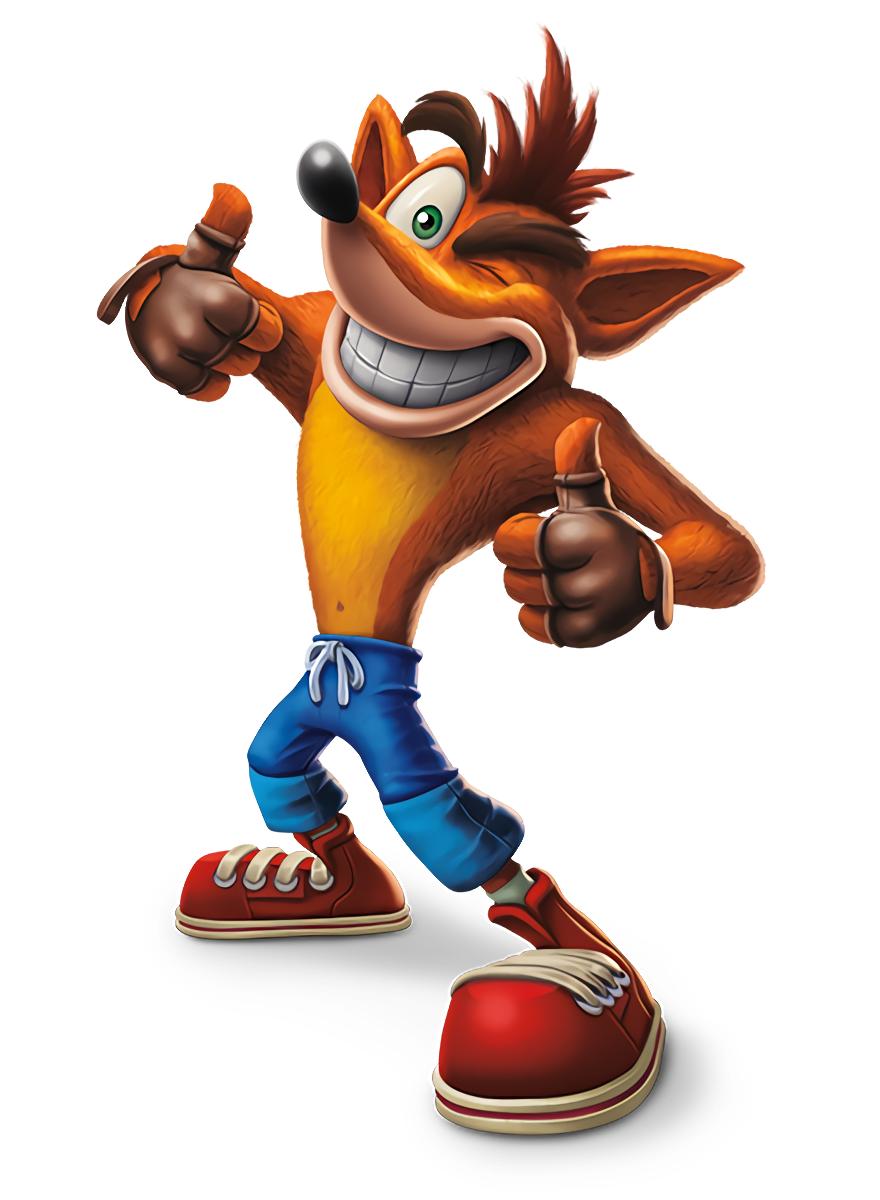
Crash Bandicoot remains one of Smash’s most obvious missing third-party mascots. He’s historically important, instantly readable, and mechanically distinct. The real question is whether his PlayStation legacy and uneven modern momentum make him harder to justify now than he would have been during Ultimate.
- Core idea: Crash could work as a frantic platforming brawler built around spins, crates, Wumpa Fruit and slapstick momentum.
- Why it works: He represents a major late-’90s mascot era that Smash has never fully covered.
- The hook: A good Crash moveset would feel less like a generic fighter and more like a Crash level crashing into Smash.
The crate-smashing marsupial who gave PlayStation its late-’90s attitude still feels like one of Smash’s biggest missing names.
Few characters feel like they have been waiting just outside the Super Smash Bros. roster longer than Crash Bandicoot.
In his own games, Crash is not exactly the polished hero type. He is a bandicoot genetically enhanced by Doctor Neo Cortex, pulled into Cortex’s plan to create an army of mutant animals before escaping and becoming the one thing standing between his would-be master and world domination. From there, with Aku Aku guiding him, Coco backing him up, and far too many crates standing in his way, Crash became a hero almost by accident. He does not stride into danger with noble certainty. He tumbles, spins, slides, panics, and somehow gets the job done anyway, which, honestly, is probably the most Crash Bandicoot origin possible.
Outside the fiction, the case becomes much bigger. Crash Bandicoot launched on the original PlayStation in 1996, and Naughty Dog has since framed that era as a defining early chapter for the studio. One Naughty Dog retrospective notes that Crash Bandicoot 2: Cortex Strikes Back, Crash Bandicoot 3: Warped, and Crash Team Racing sold 22 million copies worldwide, helping place the studio at the forefront of the industry during that console generation.
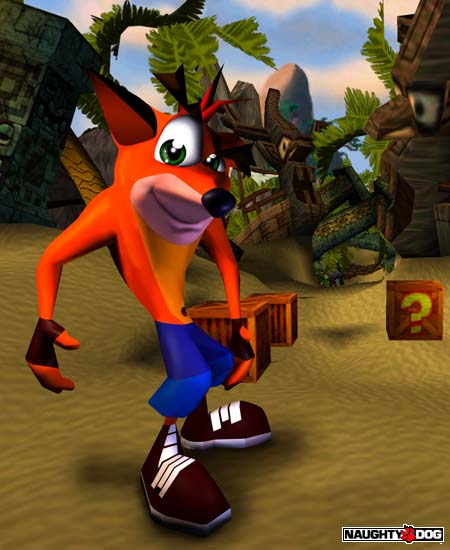
That history matters because Crash was not just another platform mascot. During the late ’90s, he became one of PlayStation’s most recognisable faces: Sony’s closest cultural answer to the mascot wars, even if the company never stamped “official Mario rival” on his forehead. Nintendo had its icon. Sega had its attitude. PlayStation had a bug-eyed marsupial in jorts who smashed boxes with his face and somehow made that feel like a brand strategy.
For a while, that strategy worked beautifully. The Naughty Dog run gave Crash a golden late-’90s streak, with that momentum carrying into the early 2000s. Then came the uneven years. After Naughty Dog moved on, Crash continued under different studios, but the series lost the clean momentum that once made him feel unavoidable.
The comeback helped. Crash Bandicoot N. Sane Trilogy brought the first three games back for a modern audience, and Nintendo’s own store copy framed the Switch release as the first time those three original Crash games had appeared on a Nintendo system. Crash Bandicoot 4: It’s About Time then followed as a direct sequel to the original trilogy, with Activision listing Nintendo Switch among its platforms.
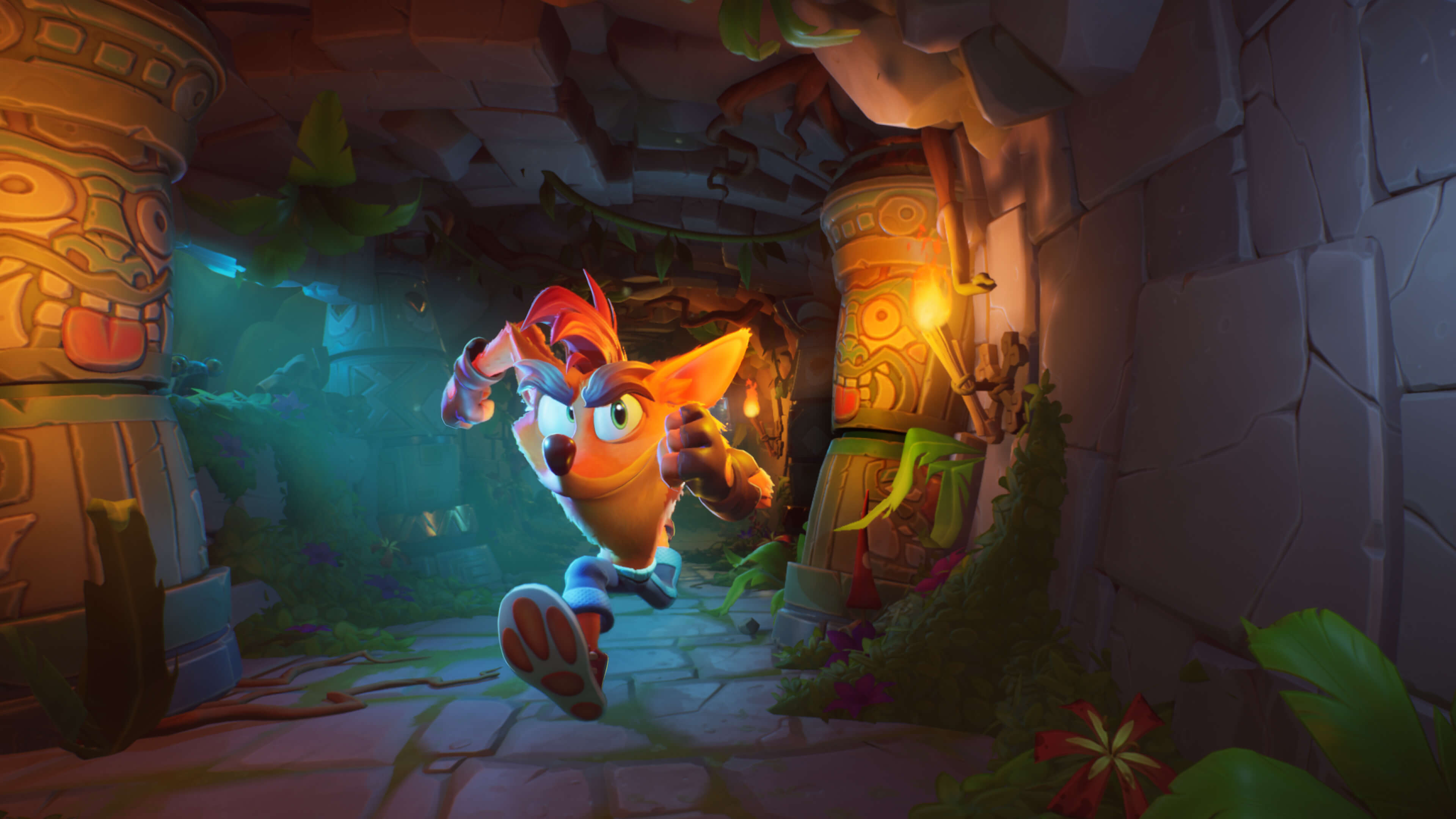
That changes the Smash conversation. Crash may have started as a PlayStation-associated icon, but he is no longer trapped in that old console-war box.
Crash Has Earned the Smash Spotlight
The strongest argument for Crash is simple; Super Smash Bros. is not just a Nintendo crossover anymore.
It is a playable museum of video game history, and Crash represents a notable chapter that still feels strangely absent. He was one of the defining faces of PlayStation platforming, a late-’90s mascot icon, and a character whose legacy stretches from the original 3D platformer boom to modern remakes and sequels. If Smash is about celebrating the medium, Crash has earned at least a very loud knock at the door.
He also no longer feels alien to Nintendo hardware. The N. Sane Trilogy, Crash Team Racing Nitro-Fueled, and Crash 4 all helped make modern Crash visible to Nintendo players. That does not magically turn him into a Nintendo character, obviously, but Smash crossed that bridge years ago. Once the same roster can make room for Sephiroth and Kazuya, the question is less “does Crash belong to Nintendo?” and more “does Crash matter enough to gaming history?” And the answer feels pretty clear.
Crash also brings a different kind of mascot energy from the platforming royalty already in Smash. Mario is clean, readable heroism. Sonic is speed with attitude. Banjo & Kazooie are warm collectathon charm. Crash is messier than all of them. He’s frantic, expressive, reckless, and only occasionally aware that he is the hero. Smash is at its best when a fighter’s personality comes through before anyone starts discussing frame data, and Crash has that built into his design. You know exactly what kind of disaster he is the second he starts moving.
That is important, because Crash has more to offer than recognition alone. His games are built from momentum, panic, and the constant threat of something exploding at exactly the wrong time. A lazy Crash moveset would stop at “he spins.” A good one would understand why the spin works in the first place, and that’s because it is only one part of a much bigger platforming language.
That is where he starts to feel less like nostalgia bait and more like a proper, purpose-built Super Smash Bros. fighter.
The PlayStation Mascot Problem
Of course, there is one obvious complication.
Crash’s PlayStation legacy is both his biggest selling point and the thing that makes his Smash case slightly awkward. He matters because he was once treated by players and marketing culture as one of PlayStation’s signature mascots, but that same history means he has always stood a little outside Nintendo’s orbit. Smash has welcomed plenty of third-party icons, but Crash still carries the strange baggage of being a former rival-era mascot asking to join Nintendo’s biggest crossover party.
Timing is the other issue. If Crash was ever going to appear in Smash, Ultimate felt like the cleanest moment. That was the game built around “everyone is here.” It brought back every fighter from the series’ past, added enormous third-party names, and ended its DLC run with Sora. Crash would have made sense in that environment. He could have been another missing piece of gaming history finally slotting into place, and in a future Smash game, the reveal might not hit with quite the same force.
Crash is still famous, still beloved, and still historically important, but the franchise is not operating at the same cultural peak it enjoyed during the original PlayStation era. The remasters proved the audience was still there, and Crash 4 reminded people that the series could still work as a modern platformer, but he is no longer one of gaming’s automatic front-page mascots.
That does not kill his chances. It just means the argument has to be better than “remember him?” And honestly, it is.
The Spin Is Only the Start
The best case for Crash is not just that he used to be huge. It is that he could bring a style of movement and personality Smash does not quite have.
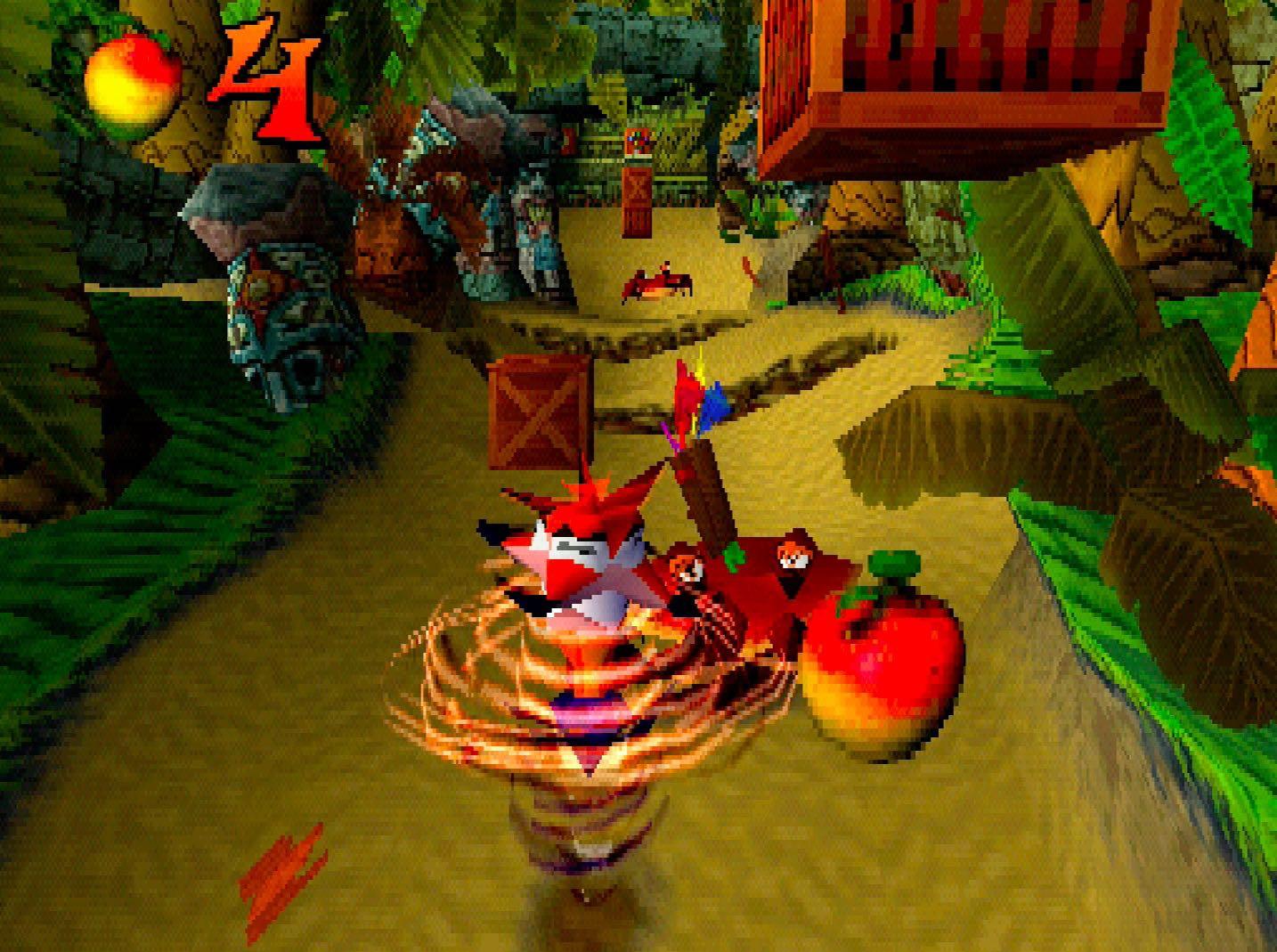
Crash should not feel graceful. In fact, if he feels graceful, something has gone wrong. He is not a martial artist, a swordsman, a soldier, or a carefully trained hero. He is a walking accident with perfect timing. In Smash terms, that opens up a genuinely fun design space. A fast, scrappy, ground-focused brawler who uses momentum, crates, hazards, and slapstick pressure to make every interaction feel slightly out of control.
That is a tricky balance, but it is also exactly the kind of challenge Smash usually handles well. The comedy should live in Crash’s animation, timing, and risk rather than making him weak, random, or gimmicky. He should be chaotic without being arbitrary, recognisable without being simplistic, and clumsy-looking without ever feeling badly designed. He should look like he barely knows what he is doing, while the player absolutely knows what they are doing.
It is similar to the question raised in our Shadow the Hedgehog Smash Bros speculation article. Popularity is not enough on its own. The character has to justify themselves through identity, contrast, and the way they would actually feel in motion.
For Shadow, that meant avoiding the echo fighter trap.
For Crash, it means avoiding the reductive design trap. That being the idea that his spin move is all he has to offer.
A Crash built entirely around spinning would be a waste of the slot. The spin is essential, yes, but it should be the foundation rather than the whole building. His real potential comes from everything around it: crates, slides, Wumpa fruit, and the constant sense that one bad decision could turn into a Smash highlight reel.
So, with that in mind, here is how Crash could actually work.
Crash Bandicoot Moveset Concept
Attributes
Weight: Medium-light
Movement: Fast, scrappy, and ground-focused
Jump: High and floaty, with a useful double jump
Archetype: Platforming brawler built around spins, crates, Wumpa projectiles, and chaotic stage control
Crash should feel fast, but not graceful. He is not Sonic, and he is definitely not a trained fighter like Ryu or Ken. He is a genetically enhanced bandicoot who solves problems by spinning, sliding, belly-flopping, and occasionally trusting explosives he has no business standing near.
The fantasy is controlled stupidity. You know what you want Crash to do. You are just never completely sure whether Crash knows himself.
Basic Attacks
Jab
Crash’s classic spin. Like Mega Man’s basic shot, this should be his defining action mapped onto his simplest button rather than a normal punch combo.
Dash Attack
Crash slides low across the ground, clipping opponents as he skids past. Quick, risky, and immediately recognisable as one of his core movement tools.
Tilts
Forward Tilt
A quick step-in kick based on Crash’s slide-jump momentum. It gives him a grounded poke without making him look like a trained martial artist.
Up Tilt
Crash pops upward with a short crate-breaking headbutt. Simple, fast, and built around the same instinct he uses whenever a box is above him.
Down Tilt
Crash drops low and swipes forward from a crawling stance. It keeps him close to the ground and ties the move to his platforming routes rather than generic fighting poses.
Smash Attacks
Forward Smash
Crash swings the Fruit Bazooka upward in a heavy close-range bash. It is Crash using a ranged weapon incorrectly, which is exactly why it works.
Up Smash
Crash springs upward with a heavier crate-breaking headbutt. A clean vertical launcher that turns his basic box-breaking motion into a committed Smash attack.
Down Smash
Crash belly-flops into the ground, creating a compact shockwave on both sides. Dumb, readable, painful, and somehow effective.
Aerials
Neutral Air
Crash performs his classic spin in the air. This is the other place the basic spin absolutely belongs: simple, reliable, and instantly recognisable.
Forward Air
Crash swings both arms downward in a clumsy overhead chop. It gives him a committed aerial hit without suddenly making him graceful.
Back Air
Crash kicks backward with both feet, looking surprised by his own momentum. The animation sells the joke, but the move still works as a clean backward hit.
Up Air
Crash snaps upward with a quick headbutt. A straightforward juggling move that keeps his air attacks tied to crate-breaking impact.
Down Air
Crash drops with a belly flop. This should be a meteor move, because being flattened by Crash Bandicoot from above should absolutely ruin your afternoon.
Grabs and Throws
Grab
Crash reaches out with both hands. The animation should be twitchy and frantic, but the function should stay simple.
Pummel
Crash bonks the opponent with his forehead. Simple, stupid, correct.
Forward Throw
Crash spins once while holding the opponent, then releases them forward. It uses the spin as a throw flourish without turning the whole kit into one repeated animation.
Back Throw
Crash stumbles backward and tosses the opponent behind him during the stumble. It should look accidental, but still read clearly as a throw.
Up Throw
Crash headbutts the opponent upward. The same crate-breaking instinct, now applied to someone who made the mistake of being above him.
Down Throw
Crash slams the opponent down, then belly-flops beside them to pop them up. It gives him a slapstick pressure throw without handing him anything too automatic.
Special Moves
Neutral Special — Charged Spin Attack
Crash charges in place, building up a stronger version of his classic spin. A tap gives him a quick burst, while holding the button increases its reach, damage, and priority.
It works because the basic spin is already covered in his normals. This is where Crash gets the powered-up version: still simple, still iconic, but much harder to ignore.
Side Special — Fruit Bazooka
Crash pulls out the Fruit Bazooka and fires Wumpa Fruit straight ahead. It should be a fast, light projectile, closer to Fox or Falco’s laser than a heavy cannon shot.
This gives Crash a little mid-range control without turning him into a zoner. He is still a scrappy platforming brawler; he just happens to have brought fruit-based artillery.
Up Special — Bounce Crate
Crash drops a Bounce Crate beneath himself and springs upward. The crate can be bounced on up to three times before it breaks, and opponents can interact with it too.
This is the move that makes Crash feel like he brought his own level design into Smash. It is recovery, utility, and stage nonsense all in one clean idea.
Down Special — TNT / Nitro Crate
Crash places a crate trap. Usually it is a TNT Crate with its familiar countdown, but occasionally it is a Nitro Crate that explodes immediately on contact.
That gives Crash stage control that feels completely his own. Crucially, Nitro should be able to hurt Crash too, because sometimes the correct Crash experience is blowing yourself up and having nobody else to blame.
Final Smash — Aku Aku Unleashed
Aku Aku flies in, circles Crash, and surrounds him with the familiar invincibility aura. You hear that unmistakable mask chant, the one every Crash player hears as “ooga booga,” and Crash enters a brief powered-up Final Smash sequence that turns Aku Aku invincibility into controlled chaos.
He tears around the stage at high speed, crashing through opponents for huge damage and knockback while protected by Aku Aku’s power. Think less “lore-heavy cinematic attack” and more “the safest place to stand is nowhere.”
This is the cleanest possible Crash Final Smash. It does not need a giant laser, a multiverse sequence, or a villain cameo. It just needs Crash becoming invincible and sprinting around like a maniac while the opponent realises every health and safety rule has been violated. Simple, iconic, and exactly the kind of panic button Crash would press on purpose.
In other words, it is Crash Bandicoot.
Why Crash Would Feel Different
This is where Crash’s Smash case gets stronger.
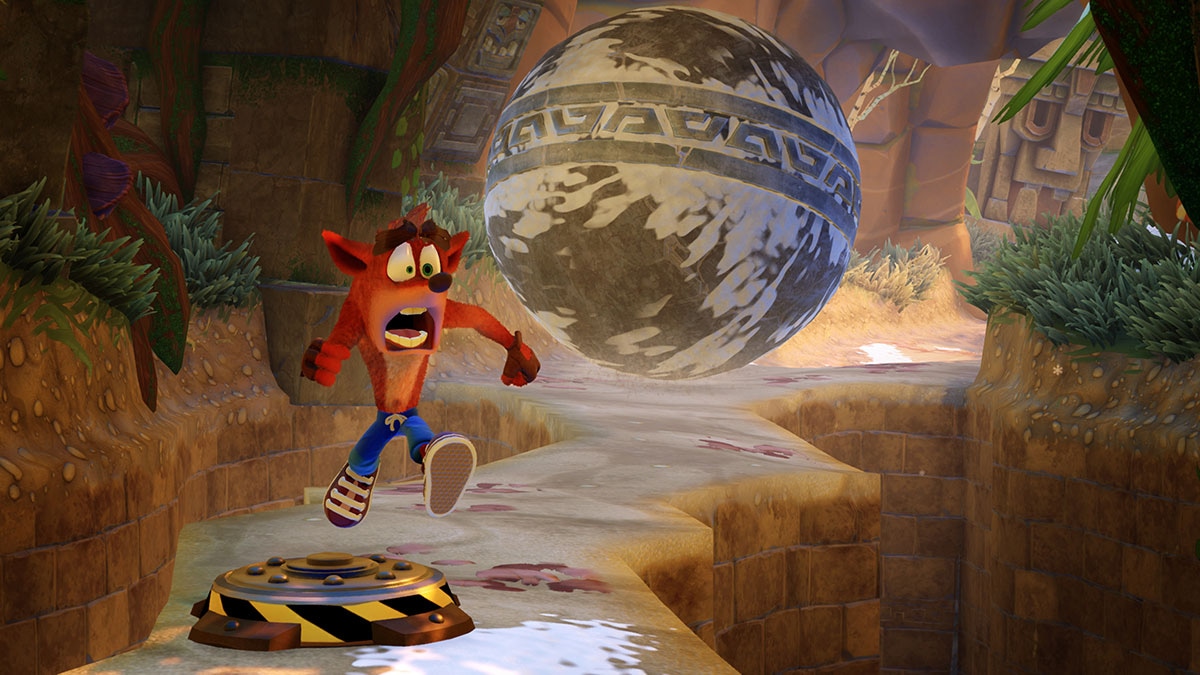
A kit like this would not just dress a generic fighter in orange fur and call it a day. It would make Crash feel like he dragged an entire Crash Bandicoot level onto the stage with him. The spin gives him the obvious core action, but the crates are what would make him distinct. Bounce Crates for recovery. TNT and Nitro for traps. Wumpa Fruit through the Fruit Bazooka for light projectile pressure. Aku Aku for the biggest possible “now it is your problem” Final Smash.
That is the good version of Crash in Smash.
The important thing is that he should be fast, but not smooth. There is a difference. Sonic is speed as confidence. Fox is speed as precision. Captain Falcon is speed as commitment. Crash should be speed as a terrible idea that somehow worked. He should skid, overextend, belly-flop, bounce off things, and occasionally look surprised that the opponent was hit by the move he definitely meant to use…
That also gives him a clean visual identity. Smash newcomers need to read instantly, especially in a roster this crowded. Crash already has that. A silhouette, a movement style, a crate, a spin, a mask, a panic animation — all of it communicates who he is without needing a lore dump or a cinematic explanation.
The Final Smash almost writes itself, too. Aku Aku invincibility does not need to become an overproduced multiverse sequence or a villain parade. Crash gets the mask, becomes briefly unstoppable, and tears around the stage like every health and safety rule has been cancelled. Simple. Iconic. Completely Crash.
Would Crash Deserve the Slot?
Crash Bandicoot deserves to be in the Smash conversation because he represents more than one character.
He represents Naughty Dog’s first major icon, the original PlayStation mascot era, the late-’90s platforming boom, and the strange journey of a once PlayStation-associated hero becoming a broader third-party gaming figure. That is valuable history for a series like Smash, especially one that has increasingly presented itself as a celebration of video games rather than just a Nintendo all-star fighter.
There are fair reasons to question the timing. Ultimate may have been the perfect window, and Crash’s modern relevance is not quite as overwhelming as his legacy. But legacy still matters, especially when the character has such an obvious visual identity, such a strong mechanical foundation, and such a different personality from the roster’s more polished heroes.
Crash would not need to be the biggest reveal of the next Smash game. He would just need to arrive like Crash: reckless, recognisable, weirdly durable, and one bad TNT placement away from disaster.
That is the pitch.
Not a polished hero. Not a perfect mascot. Not a legacy pick standing politely in the corner and waiting to be appreciated.
Crash should spin into frame, smash the crate, set off the TNT, survive it by accident, and somehow leave the entire roster looking like they were the ones who made the mistake.
 Canonyx
Leave a comment